Unveiling the Complexities of Layout and Manufacturing at a Metal Foundry
The style and manufacturing procedures at a metal foundry involve a series of detailed steps. Each phase, from selecting resources to melting and casting, plays an important duty in the final product. Metal Casting. Accuracy and quality assurance are critical in this sector. As innovation developments, brand-new technologies are arising. These advancements might redefine traditional techniques. What ramifications do these adjustments hold for the future of steel shops?
The Melting Process: Transforming Raw Products Into Liquid Metal
The melting process works as the crucial primary step in transforming basic materials right into fluid metal, a treatment essential for foundry procedures. This phase starts with the careful choice of steels, which might include copper, iron, or aluminum, relying on the preferred last product. Each material is evaluated for purity and composition to guarantee perfect melting conditions.
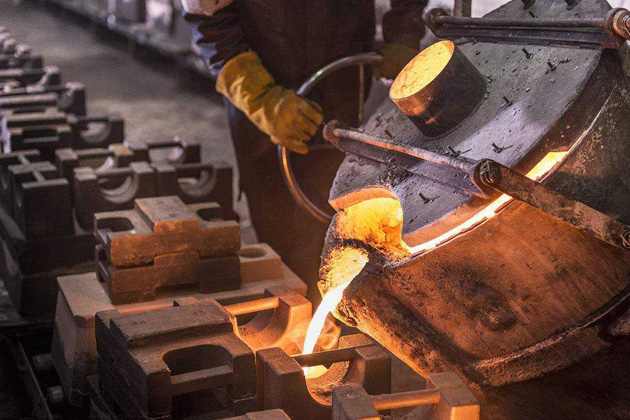
As the steels reach their melting point, they transform from strong to liquid, enabling further improvement. This process can additionally include the removal of impurities with slag formation, assuring the quality of the fluid metal. Ultimately, the effective conclusion of the melting procedure lays the structure for subsequent metalworking procedures.
Molding Techniques: Shaping Metal With Precision
Adhering to the melting procedure, the next stage in metal foundry procedures involves molding techniques that form the fluid metal into desired forms. Numerous techniques are employed, each selected based upon the specific demands of the project. Sand casting, among the most common methods, makes use of a mix of sand and binder to produce mold and mildews that can be quickly shaped and reused. An additional method, investment casting, includes developing a wax pattern that is coated in a ceramic shell, allowing for detailed styles and high precision.
Die casting, in comparison, makes use of high-pressure to inject molten steel right into steel mold and mildews, causing resilient and consistent products. Additionally, the option of molding method affects the cooling rate, surface finish, and dimensional accuracy of the end product. Subsequently, comprehending these techniques is crucial for optimizing layout and ensuring the successful manufacturing of metal elements customized to specific applications.
Casting Approaches: From Model to Production
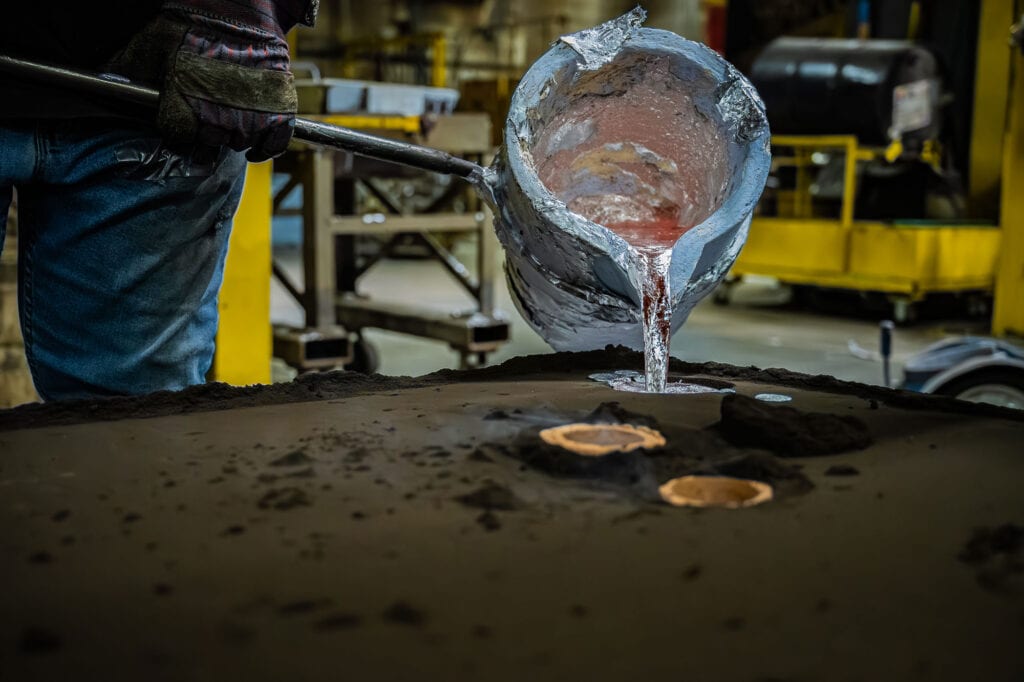
Countless spreading methods are utilized in steel shops to change from prototype advancement to full-scale manufacturing. Amongst these techniques, sand casting sticks out for its flexibility and cost-effectiveness, making it excellent for both big and small production runs. Investment spreading, understood for its accuracy, is usually utilized for intricate geometries, permitting fine information in the end product. Pass away casting, suitable for high-volume manufacturing, utilizes liquified steel injected right into mold and mildews, providing excellent surface area coating and dimensional accuracy.
Top Quality Control: Ensuring Quality in Every Pour
While the spreading process can vary significantly between methods, maintaining rigorous quality assurance is vital to ascertain that every pour fulfills the required standards. Quality control in a metal foundry incorporates a collection of methodical checks and assessments developed to determine problems early in the production procedure. This consists of careful inspections of resources, surveillance of melting temperatures, and assessments of mold and mildew stability.
Foundry workers utilize various screening methods, such as non-destructive testing and dimensional confirmation, to identify that spreadings attain preferred specifications. In addition, adherence to established sector criteria and qualifications enhances the reliability of the end product.
Responses loops are additionally important; any type of inconsistencies kept in mind during quality assessments are examined to fine-tune procedures and reduce future mistakes. Inevitably, a culture of quality control fosters not just client contentment however additionally a reputation for quality in the competitive landscape of metal production.
Developments and Technologies: The Future of Metal Foundries
The landscape of steel factories is rapidly developing, driven by advancements in technology and cutting-edge techniques. Automation and robotics are transforming standard workflows, enhancing effectiveness and accuracy during manufacturing. Automated pouring systems and robotic arms minimize human mistake, resulting in better outcomes. Additionally, the combination of expert system is enabling predictive upkeep, enhancing tools performance, and decreasing downtime.
Additive production is emerging as this contact form a game-changer, allowing for fast prototyping and the creation of complex geometries that were previously unattainable. This technology helps with the personalization of steel components, catering to specific client needs without significant time delays.
Sustainability is also a key focus, with shops adopting greener practices, such as reusing scrap steel and making use of energy-efficient heaters. These innovations not only improve efficiency but also straighten with global initiatives towards environmentally liable manufacturing, ensuring the future of metal shops continues to be affordable and robust in a transforming commercial landscape.
Regularly Asked Questions
What Sorts of Metals Are Commonly Made Use Of in Shops?
Common steels made use of in foundries include aluminum, cast iron, bronze, brass, and steel (Metal Foundry). Each steel possesses unique homes, making them suitable for numerous applications in industries such as vehicle, aerospace, and building and construction, to name a few
How Do Foundries Take Care Of Waste and Environmental Effect?
Foundries handle waste and environmental effect by executing reusing programs, using innovative filtering systems, and adhering to rigorous regulative criteria. They commonly purchase sustainable innovations to reduce exhausts and advertise accountable source use throughout their operations.
What Security Steps Are in Location for Employees?
Foundries execute numerous safety steps for employees, including personal protective devices, proper air flow systems, normal security training, emergency situation action methods, and strict adherence to occupational health and wellness guidelines to minimize risks related to hazardous materials and devices.
The length of time Does the Entire Manufacturing Refine Commonly Take?
The entire manufacturing process normally takes several weeks, relying on the complexity of the design and the materials made use of. Aspects such as mold and mildew prep work, melting, and cooling time substantially influence the overall duration of production.
What Are the Main Challenges Faced by Metal Shops Today?
Metal shops today encounter obstacles such as climbing product expenses, fluctuating demand, environmental regulations, proficient labor lacks, and preserving quality assurance. These issues make complex manufacturing performance and productivity in a significantly affordable market.
The style and production processes at a metal foundry entail a collection of complex actions. The melting procedure offers as the essential first action in transforming raw products right into liquid steel, a procedure vital for foundry procedures. Complying with the melting process, the next stage in steel foundry operations involves molding strategies that form the fluid metal right into preferred forms. Countless spreading techniques are employed in steel factories to shift from model advancement to full-scale manufacturing. Quality control in a metal foundry includes a series of organized checks and examinations created to determine issues early in the production procedure.
Comments on “Sustainability efforts in today’s Aluminum Foundry operations”